

Tabouri Sarah¹, Benchouk Jesia Asma², Douar Elhadj³, Bachir Belmelhdi Maha⁴, Saouli Mustapha⁵
1Department of Medical Oncology, Center Cancer, Faculty of Medicine TALEB Murad, Djillali Liabes University, Sidi Bel Abbes, Algeria.
2Department of Senologic and Pelvic Surgery, Cancer Center, Taleb Morad Faculty of Medicine, Djillali Liabes University, Sidi-Bel-Abbes, Algeria
3Department of Medical Oncology, Mohamed Boudiaf Public Hospital Establishment, El Bayadh, Algeria. 4Department of Gynecological-Oncology, Specialized Mother And Child Hospital Establishment Sidi Bel Abbes, Algeria
5General Surgery, Mohamed Boudiaf Public Hospital Establishment El Bayadh, Algeria.
Abstract
Chronic kidney disease (CKD) and cancer are two serious and increasingly prevalent diseases. They are interconnected in multiple ways and bidirectionally: cancer can directly or indirectly cause CKD through adverse effects of therapies; conversely, CKD can be a risk factor for cancer. Both conditions may coexist in a patient. The number of cancer patients undergoing hemodialysis is on the rise, presenting a growing challenge for oncologists, nephrologists, and pharmacists worldwide, as there are approximately one million hemodialysis patients. In hemodialysis patients, the concerns are twofold: their renal function is impaired, exposing them to the risk of overdosing and adverse effects. Simultaneously, careful planning of treatment administrations concerning dialysis sessions is necessary to avoid premature drug clearance by dialysis, preventing underdosing and consequently treatment ineficacy. In this article, we present a case of a patient with chronic renal insuficiency undergoing hemodialysis for 16 years, who developed breast cancer. Through this case, we illustrate the challenges encountered in managing such patients and provide a literature review summarizing recommendations.
Observation
Chronic kidney disease (CKD) and cancer are two serious and increasingly prevalent diseases. They are interconnected in multiple ways and bidirectionally: cancer can directly or indirectly cause CKD through adverse effects of therapies; conversely, CKD can be a risk factor for cancer. Both conditions may coexist in a patient. The number of cancer patients undergoing hemodialysis is on the rise, presenting a growing challenge for oncologists, nephrologists, and pharmacists worldwide, as there are approximately one million hemodialysis patients. In hemodialysis patients, the concerns are twofold: their renal function is impaired, exposing them to the risk of overdosing and adverse effects. Simultaneously, careful planning of treatment administrations concerning dialysis sessions is necessary to avoid premature drug clearance by dialysis, preventing underdosing and consequently treatment ineficacy. In this article, we present a case of a patient with chronic renal insuficiency undergoing hemodialysis for 16 years, who developed breast cancer. Through this case, we illustrate the challenges encountered in managing such patients and provide a literature review summarizing recommendations.
A 54-year-old patient, with no family history of cancer, has been experiencing chronic renal insufficiency for 16 years and developed left breast cancer measuring 23/12mm located at the junction of the upper quadrants and two additional nodules of 05 and 06 mm at the junction of the lower quadrants, without ipsilateral axillary lymphadenopathy. The breast cancer was clinically classified as T2N0M0. A biopsy of the nodules revealed a grade III SBR infiltrating lobular carcinoma, luminal B.
The patient presented with a complex case involving a breast tumor and a rare arteriovenous fistula (AVF) in the same arm. This ulno-basilic AVF, chosen due to exhausted venous options, posed a significant challenge for lymph node dissection. Additionally, the tumor, an infiltrating lobular carcinoma Luminal B type, remained unresponsive to neoadjuvant chemotherapy, raising concerns about potential progression. Performing primary surgery with lymph node dissection would have required sacrificing the AVF, directly impacting the patient’s survival.
Given the priority of the patient’s survival, she received neoadjuvant chemotherapy, with an Adriamycin plus cyclophosphamide protocol for four cycles, followed by four cycles of paclitaxel at 175mg/m² per cycle,every 21 days. The patient underwent dialysis three times a week and received chemotherapy on non-dialysis days. No reduction in chemotherapy dosage was adopted.
The tolerance to this chemotherapy was marked by grade 3 mucositis, grade 3 and 4 leuko-neutropenias, and grade 3 diarrhea. She also presented with grade 2 anemia, for which she received erythropoietin at a dosage of 40,000 IU per week.
Post-neoadjuvant chemotherapy, the patient showed a complete clinical response, with the disappearance of breast masses contradicting literature data.
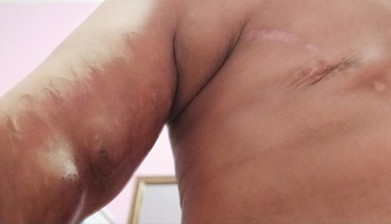
We performed surgery, which involved total mastectomy and sentinel lymph node biopsy, which was negative. This allowed us to preserve the arteriovenous fistula on the side of the affected breast (Figure 1). The pathological examination of the operative specimen concluded a complete pathological response.
The patient has a functional arteriovenous fistula, and several months after surgery, she has not developed lymphedema of the arm, which was the most feared complication in her case.
Discussion
Cancer is a significant global public health issue and one of the most common causes of morbidity and mortality. Its worldwide
incidence is estimated at over 19.3 million new cases per year, with more than 10 million deaths attributed to it annually [1].
Chronic kidney disease (CKD) is defined as a glomerular filtration rate (GFR) less than 60 ml/min/1.73m² for at least 3 months [2]. In the presence of structural lesions revealed by imaging, renal biopsy, proteinuria, or glomerular hematuria, it is termed CKD, even when the glomerular filtration rate is normal. To standardize the management of this condition, a classification into 5 stages based on the estimated glomerular filtration rate has been proposed [3] (Table 1).
CKD can be a complication of many cancers or their therapies [4], as it can also preexist. The prevalence of CKD has been assessed in several studies, including the IRMA 1 and 2 studies; which included 4684 and 4945 cancer patients, respectively. The prevalence of a glomerular filtration rate less than 60 ml/ min/1.73m² was 12% in both studies [5-6]. In other studies, these rates vary between 20 and 25% [7-9]
CKD can develop for reasons related to cancers (tubular, functional, obstructive, vascular, glomerular involvement) or be independent of it. Glomerulopathies associated with cancers are rare. Extra-membranous glomerulonephritis (EMGN) remains by far the leading paraneoplastic renal involvement associated with solid tumors [8].
Table 1.Stages of Chronic Kidney Disease [11]
Stage | Description | GFR (ml/ min/1.73m2) |
I | Chronic kidney disease* with normal kidney function | ≥90 |
II | Chronic kidney disease* with mild renal insufficieny | 60-89 |
IIIA | mild to moderate renal insufficieny | 45-59 |
IIIB | Moderate to severe renal insufficieny | 30-44 |
IV | Severe renal insufficieny | 15-29 |
V | End-stage renal disease | <15 |
*with markers of renal impairment: clinical proteinuria, hematuria, leukocyturia, or morphological or histological abnormalities, or mark- ers of tubular dysfunction, persisting for more than 3 months
The renal elimination of anticancer drugs makes estimating renal function a crucial task for adjusting the doses of antimitotic treatments [5]. Underestimation of renal function can lead to underdosing of drugs and consequently their inefficacy, while overestimation can lead to overdosing and an increased risk of toxicity.
Several studies have examined the accuracy and precision of estimation formulas in cancer patients, including Cockcroft and Gault, MDRD, CKD epi. However, the superiority of the aMDRD formula over the Cockcroft-Gault formula in all disciplines, including oncology, has been demonstrated in several studies, and only the use of aMDRD and CKD Epi formulas is indicated in oncology [10].
Hemodialysis is one of the modalities for the replacement treatment of chronic renal insufficiencies. The native arteriovenous fistula remains the preferred vascular access over prostheses and central venous catheters due to its longevity and low risk of infectious and thrombotic complications [12,13]. Although many sites are suitable for creating these fistulas, and options like vascular prostheses or catheter placement are available, possibilities can be exhausted, as was the case with our patient.
The surgery considered for our patient was a Patey-type surgery, specifically a radical mastectomy with ipsilateral axillary lymph node dissection. However, our patient had an arteriovenous fistula on the right arm (on the side of the affected breast), exposing her to a very high risk of developing arm lymphedema. Due to the depletion of her venous capital, we opted for the sentinel lymph node technique, where 03 nodes were sampled and returned negative on histological examination.
It is well established that the risk of cancer in dialysis patients is higher than that in the general population. This risk varies among studied populations, ranging from 10 to 40% [9]. Kaposi’s sarcoma, tumors of the oral cavity, kidney, bladder, stomach, liver, lung, and thyroid are the most common cancers encountered in dialysis patients. This may be due to various mechanisms, either immune dysfunction induced by dialysis or immunosuppressive or cytotoxic therapy for various glomerulonephritides or vasculitides.
Other mechanisms of carcinogenesis in uremia are related to the underlying kidney disease, such as acquired cystic kidney disease for renal cell carcinoma, as well as increased cellular damage due to DNA repair impairment or reduced antioxidant capacity [10-14].
CKD is associated with a reduced overall survival (HR: 1.27) [8, 13, 14] and an increase in mortality [15]. Each 10 ml/ min/1.73m² decrease in GFR is associated with an 18% increase in specific mortality [16]. These consequences may result from either CKD not being diagnosed in time or being diagnosed but with poorly or inadequately adjusted dosages. This can lead to overdosing of antitumor treatments, causing delays in treatment cycles, modification of treatment, or even discontinuation of specific antitumor treatments and a transition to palliative care. On the other hand, if medication dosages are too low, it can lead to treatment inefficacy, negatively impacting the survival of cancer patients.
The presence of a neoplasm in the case of CKD has several implications, particularly on the management of CKD-related complications. Agents stimulating erythropoiesis should be prescribed with caution due to feared adverse effects such as thromboembolic events and tumor progression. However, the management of other complications (hypertension, mineral and bone disorders) in cancer patients is generally similar to that in patients without cancer [17].
Except in cases where there is residual renal function that the clinician wishes to preserve, drug nephrotoxicity is no longer a concern, as renal function cannot deteriorate further. Dialysis patients are potentially exposed to the risk of drug accumulation and dose-dependent adverse effects in case of overdosing. Indeed, all pharmacokinetic parameters can potentially be altered in these patients, including for molecules metabolized by the liver [18-19].
Chronic conventional hemodialysis typically involves three weekly sessions with the aim of eliminating accumulated waste products in end-stage renal failure patients. However, these dialysis sessions can also remove medications in the dialysate (defining dialysance), potentially exposing the patient to suboptimal drug levels. Dialyzable medications should be administered after dialysis sessions to prevent their removal in the dialysate. Conversely, non-dialyzable medications can be administered either before or after the dialysis session.
To optimize drug administration concerning hemodialysis sessions, it is crucial to know the dialyzability of each medication (see Table 2). Various indices assess hemodialysis’s impact on a drug’s pharmacokinetics, such as the extraction coefficient, hemodialysis clearance, and fractional hemodialysis dose (FHD) [19].
The extraction coefficient represents the percentage of a drug eliminated from the blood through the dialyzer, indicating the dialyzer’s ability to remove a substance. Hemodialysis clearance (mL/min) reflects the relative elimination concerning the drug’s blood concentration entering the dialyzer and accounts for blood flow. FHD defines the relative contribution of hemodialysis clearance to the total body clearance of the drug during the hemodialysis session.
Our patient was treated with doxorubicin plus cyclophosphamide chemotherapy for the first four cycles without dose reduction.
Doxorubicin is an anthracycline that is primarily metabolized by the kidneys [20]. There is limited data on its use in patients with renal impairment. Dose reduction is not necessary in patients with renal impairment or in patients receiving
dialysis. Additionally, as there are no data on the dialysability of doxorubicin and its major metabolite, it is preferable to administer the drug after dialysis on dialysis days or on a day without dialysis [19,21]. Our patient therefore received the full dose of doxorubicin on the day without dialysis.
Approximately 70-80% of the administered dose of cyclophosphamide is metabolized by the liver into at least six active metabolites, each with different pharmacokinetic properties [22]. Thus, 30-60% of the administered dose of cyclophosphamide is found in the urine in unchanged or metabolite form [23]. In patients with renal impairment, the pharmacokinetics of cyclophosphamide and its metabolites are altered [24,25]. Indeed, the drug must be administered at a dose of 0.5-1 mg/m² over one hour intravenously, seven hours before the hemodialysis session. The clearance of cyclophosphamide is lower in hemodialysis patients than in non-renal patients. Therefore, it is necessary to reduce the cyclophosphamide dose by 25% in hemodialysis patients [15,17]. Additionally, as cyclophosphamide is dialyzable, it is appropriate to administer the drug after the hemodialysis session [17].
The cyclophosphamide dose was not reduced in our patient, which could explain the severity of the observed side effects: grade 3 mucositis, grade 3 diarrhea, and grade 3 leukopenia.
After the 4 cycles of doxorubicin plus cyclophosphamide, the patient received 4 cycles of paclitaxel at a total dose of 175 mg/m² every 21 days. Paclitaxel is a taxane that is primarily metabolized by cytochrome P450, with less than 10% of the drug excreted in the urine. Several pharmacokinetic studies have reported that the pharmacokinetic parameters of paclitaxel in hemodialysis patients are comparable to those measured in patients with normal renal function [24-26]. Paclitaxel can therefore be administered at a total dose in hemodialysis patients, either before or after the hemodialysis session [29,30].
Conclusion
The incidence of cancer is more frequent in dialysis patients than in the general population. Coordinated efforts among oncologists, nephrologists, and pharmacists are essential for their management. Dialyzed patients are no longer susceptible to drug nephrotoxicity, but dosage adjustments for antimitotic drugs should be discussed to avoid overdosing. Planning medication administration relative to hemodialysis sessions is crucial to prevent suboptimal drug levels for dialyzable drugs. In cases of uncertainty about a drug’s dialysance, a precautionary approach suggests administering it after hemodialysis sessions.
Table 2. Proposed management of chemotherapies in hemodialyzed patients [19].
Medication | Primary Elimination Route | Dose Adjust- ment Yes/No | Chronotherapy Relative to Hemodialysis Session | Recommended Dose in Hemodialyzed Patient |
05 Fluoro-uracil | Fecal | No | After the session | Usual Dose |
Capécitabine | Urinary | Yes | After the session* | No Data* |
Carboplatin | Urinary | Yes | After the session | Dose=ACU X (25+0) |
Cisplatin | Urinary | Yes | After the session | 50-75% Reduction |
Cyclophosphamide | Urinary | Yes | After the session | 25% Reduction |
Docetaxel | Fecal | Yes | Before or After the session | 65mg/m² |
Doxorubicine | Fecal | No | After the session | Usual Dose |
Epirubicine | Fecal | No | After the session | Usual Dose |
Etoposide | Fecal | Yes | Before or After the session | 50% Reduction |
Gemcitabine | Urinary | No | 6-12h Before the session | Usual Dose |
Irinotecan | Fecal | Yes | After the session | Usual Dose |
Oxaliplatine | Urinary | No | After the session * | Usual Dose * |
Paclitaxel | Urinary | No | Before or After the session | Usual Dose |
Vinorelbine | Fecal | Yes | After the session | IV : reduction of 20 to 33% |
*To be avoided in hemodialyzed patients | ||||
Conflict of Interest
The authors declare that they have no conflicts of interest..
References
1. New Global Cancer Data : Globocan 2020
2. National Kidney Foundation. K/DOQI clinical practice guidelines for chronic kidney disease: evaluation, classification, and stratification. Am J Kidney Dis 2002;39:S1-266.
3. Ponte B, Martin PY, Pechère A, Guessous I, Burnier M. Insuffisance rénale chronique: attitudes et pratiques de dépistages en l’absence d’éudes randomisés. Rev Med Suisse 2010;6:1400-4.
4. Rosner MH, Perazella MA. Onconephrology: Kidney Disease and Cancer. 42; Brenner and rector’s the kidney. Elsevier 2020;2:1407- 31.
5. Launay-Vacher V, Oudard S, Janus N, et al. Prevalence of renal insufficiency in cancer patients and implications for anticancer drug management: the renal insufficiency and anticancer medications (IRMA) study. Cancer 2007;110:1376-84.
6. Launay-Vacher V. Epidemiology of chronic kidney disease in cancer patients: lessons from the IRMA study group. Semin Nephrol 2010;30:548-56.
7. Cantera D, Kutikova A, Manleya B, et al. Utility of the R.E.N.A.L.-Nephrometry Scoring System in Objectifying Treatment Decision-Making of the Enhancing Renal Mass. Urology. 2011;78(5):1089–1094.
8. Nakamura Y, Tsuchiya K, Nitta K, Ando M. Prevalence of anemia and chronic kidney disease in cancer patients: clinical significance for 1-year mortality. Nihon Jinzo Gakkai Shi. 2011;53(1):38-45.
9. Launay-Vacher V, Chatelut E, Lichtman SM, Wildiers H, Steer C, Aapro M; International Society of Geriatric Oncology. Renal insufficiency in elderly cancer patients: International Society of Geriatric Oncology clinical practice recommendations. Ann Oncol. 2007;18(8):1314-21.
10. Faluyi OO, Masinghe SP, Hayward RL, Clive S. Accuracy of GFR estimation by the Cockroft and Gault, MDRD, and Wright equations in Oncology patients with renal impairment. Med Oncol. 2012;29(2):755-60.
11. Collège universitaire des enseignants en néphrologie. Insuffisance rénale chroniqueet maladies rénales chroniques. 2016;15:237-62.
12. Sidawy A, Spergel LM, Besarab A, et al. The society for vascular surgery: clinical guidelines for the placement and maintenance of arteriovenous hemodialysis access. J VascSurg. 2008;48(5 Suppl):2S–25.
13. Casey K, Tonnessen BH, Mannava K, Noll R, Money SR, Sternbergh C. Brachial versus basilic vein dialysis fistulas: A comparison and of maturation and patency rates. J Vasc Surg. 2008;47(2):402–6.
14. Launay-Vacher V. Epidemiology of chronic kidney disease in cancer patients: lessons from the IRMA study group. Semin Nephrol. 2010;30(6):548-56.
15. Chen J, Wang XT, Luo PH, He QJ. Effects of unidentified renal insufficiency on the safety and efficacy of chemotherapy for metastatic colorectal cancer patients: a prospective, observational study. Support Care Cancer. 2015;23(4):1043-8.
16. Iff S, Craig JC, Turner R, et al. Reduced estimated GFR and cancer mortality. Am J Kidney Dis. 2014;63(1):23-30.
17. Wright JG, Boddy AV, Highley M, et al. Estimation of glomerular filtration rate in cancer patients. Br J Cancer 2001;84:452-9.
18. Ronco PM. Paraneoplastic glomerulopathies: new insights into an old entity. Kidney Int 1999;56:355-77.
19. Maisonneuve P, Agodoa L, Gellert R, et al. Cancer in patients on dialysis for endstage renal disease: an international collaborative study. Lancet 1999;354:93-9.
20. Stengel B. Chronic kidney disease and cancer: a troubling connection. J Nephrology 2010;23:253-62.
21. Saly DL, Eswarappa MS, Street SE, Deshpande P. Renal Cell Cancer and Chronic Kidney Disease. Adv Chronic Kidney Dis 2021;28:460-8.
22. Rosner MH, Perazella MA, Magee CC. Overview of kidney disease in patients with cancer. Jan 17, 2023.
23. Launay-Vacher V, Storme T, Izzedine H, Deray G. Pharmacokinetic changes in renal failure. Presse Med 2001;30:597-604.
24. Verbeeck RK, Musuamba FT. Pharmacokinetics and dosage adjustment in patients with renal dysfunction. Eur J Clin Pharmacol 2009;65:757-73.
25. Janus N, Launay-Vacher V, Deray G, Thyss A, Thariat J. Management of chemotherapy in hemodialysis patients. Bull Cancer. 2012;99(3):371-380..
26. Gabizon A, Catane R, Uziely B, et al. Prolonged circulation time and enhanced accumulation in malignant exudates of doxorubicin encapsulated in polyethylene-glycol coated liposomes. Cancer Res1994;54:987-92.
27. Yoshida H, Goto M, Honda A, et al. Pharmacokinetics of doxorubicin and its active metabolite in patients with normal renal function and in patients on hemodialysis. Cancer Chemother Pharmacol. 1994;33:450-4.
28. de Jonge ME, Huitema ADR, Rodenhuis S, Beijnen JH. Clinical pharmacokinetics of cyclophosphamide. Clin Pharmacokinet 2005;44:1135-64.
29. Launay-Vacher V, Karie S, Deray G. GPR Anticancéreux. Guide de prescription des médicaments chez le patient insuffisant rénal, 4eed. France : Méditions International, 2008.
30. Woo MH, Gregornik D, Shearer PD, Meyer WH, Relling MV. Pharmacokinetics of paclitaxel in an anephric patient. Cancer ChemotherPharmacol 1999;43:92-6